Money Anxiety and Undercharging: Why You Undercharge, Avoid Checking Your Bank Balance, and Discount Before Anyone Asks. Your tone shifts when money is discussed. You mumble the amount, include an unwanted discount, and then ignore your accounting app, leaving it unopened for weeks.
If you’ve been exploring the reasons behind money anxiety or why you tend to undercharge for high-quality work, this article offers a clinical explanation, likely different from what you’ve been told.
I am Andrea A. Smith, a clinical therapist with 25 years’ experience in CBT, EMDR and clinical hypnotherapy, working online with female founders in the UK and internationally. Client details have been changed and combined, as always.
What is money anxiety and undercharging? The short clinical answer
Money anxiety and undercharging is a threat response where the nervous system perceives your finances, such as prices, invoices, and balances, as danger rather than neutral data. This often originates from childhood experiences involving money: it was fought over, silenced, or linked to shame about desire. In adulthood, this response can lead to undercharging, avoiding financial situations, and offering discounts without prompting.
Notice what that definition omits: it doesn’t say you are bad with money. Many women I work with handle others’ finances flawlessly. The issue is specifically about wanting for themselves.
The Voice Drop: hearing the root
The most reliable sign of this root is audible. When money enters the conversation, the pitch drops on the number, the pace quickens, and softeners appear: ‘ish’, a little laugh, an unprompted justification.
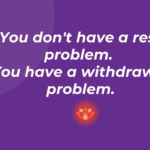
The drop is involuntary, which makes it clinically useful: you cannot fake a level larynx. Record yourself saying your full price, then play it back. If the pitch drops on the number, the root is still charging you.
The wanting injury: why the advice hasn’t worked
Wanting is an instinctive system in the brain that can be shaped through learning. When a child discovers that openly asking causes shame, she doesn’t stop wanting; instead, she learns to desire quietly, to pre-shrink her request, and to apologize for her appetite before anyone else has the chance.
The adult response: her threat system perceives her own numbers as dangerous, causing her reasoning brain to shut down as soon as they appear. She’s not avoiding a spreadsheet; she’s avoiding what her body has classified as a predator.
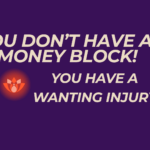
This is why abundance and manifestation often backfire on the women who need help the most. Saying ‘Money flows to me easily’ activates a nervous system that fears desire, amplifying the danger with each repetition. You do not have a money block; you have a wanting injury, which needs healing rather than affirmation.
The Smallest Portion: where the rule is learned
The rule is rarely taught in words. It is demonstrated. In many histories I read, there is a mother who served herself last, took the smallest portion, wore the same coat for a decade, and never once said ‘I want’ out loud.
I call it the Smallest Portion: eighteen years of observing a good woman go without teaches a daughter the family’s core lesson about desire, all without a single lecture. Years later, she notices how her mother plates food, everyone else first, herself last.
The unprompted discount functions as an apology for desire, given in advance to a kitchen that no longer exists. In my workload, this Apology Discount amounts to between 30 and 60 per cent of the market rate for each engagement, and has been sustained over the years.
The Level Voice: a clinical protocol
Step one. Write your true market price on paper, alone, and sit for sixty seconds, noticing the body: chest, throat, the urge to add ‘but’. You are taking measurements, not fighting the reaction.
Step two. Once a day, record yourself saying the full sentence, ‘The engagement is six thousand pounds,’ flat, with no softeners, followed by ten seconds of silence. Play it back and listen for the pitch drop. In week one, it will be there. Track it like a physiotherapist tracks range of motion.
Step three. Start by regulating yourself and then go live, beginning with the lowest stakes. Practice ninety seconds of deep exhalation: breathe in through the nose for four counts, then exhale for eight counts. Follow this with a level sentence within a small real-life context. The nervous system adjusts gradually, updating one step at a time.
Step four. Keep quiet and note the result. After stating the number, count to ten and allow the other person to speak first; the unspoken doubt exists in that silence and fades away there. Then, write a brief line about what my voice did, what I feared, and what actually happened. The feared disaster is a perfect record of what didn’t occur, and this record updates the threat file.
The marker of progress is audible: when the pitch is level, so is the root.
Which pattern is this root running in you?
Wanting is unsafe is one of six roots I map beneath the nine survival patterns among high-performing women. It fuels the Money Ghost and frequently stacks with people-pleasing or perfectionism.
My free Inner Critic Scorecard identifies your dominant pattern in three minutes. If your voice dropped as you read this, start there. This is where you will realise whether you have money anxiety and undercharging.
Take the free Inner Critic Scorecard: andreaasmith.com/inner-critic-scorecard
Working with me, in the UK and internationally
I am based in Surrey, UK, and work entirely online with founders and entrepreneurs across the UK, Europe, the US and beyond. Root-level work on money anxiety, using CBT, EMDR and clinical hypnotherapy, is one of the most common reasons clients come to me and one of the fastest to show measurable change: you can hear it.
FAQ: Money Anxiety and Undercharging
Why do I undercharge for my work?
Undercharging typically reflects a threat response rather than a strategic weakness. When expressing a desire openly felt unsafe in childhood, quoting the full price triggers a traditional alarm. The system then responds by decreasing the ask, reducing the amount, softening the tone, or providing an unsolicited discount to ease the perceived threat.
Why do I avoid checking my bank account?
Since your threat system perceives your own numbers as danger, it triggers the same physiological response as a physical threat, shutting down the reasoning brain. The solution involves regulated, graduated exposure, starting with calm situations and gradually increasing the numbers, rather than relying on willpower or discipline.
Is money anxiety and undercharging a trauma response?
Frequently, it is a survival adaptation formed when money was charged in childhood: fought over, silenced, or tied to shame about wanting. The nervous system encoded ‘wanting openly is unsafe’, and adult finances inherit that rule wholesale.
Why doesn’t money mindset work for me?
Since affirmations stimulate a nervous system that fears desire, they tend to provoke minor signals of danger. The mindset is managed in the prefrontal cortex, which shuts down when the threat of money arises. Effective regulation and gradual exposure help establish the corresponding rule.
Why does my voice change when I talk about money?
The pitch drop is an involuntary threat signal: the body tensing when making the ask. It is valuable clinically because it cannot be mimicked, so recording your price sentence weekly provides an honest, audible indicator of whether the root issue is resolving.
How do I stop giving discounts nobody asked for?
Practice maintaining silence. The unprompted discount is given to fill the ten seconds after stating the number. Repeat the full price sentence, then pause for ten seconds, first recording, then live. Once silence becomes comfortable, the discount’s purpose diminishes.
To watch the video of me explaining money anxiety and undercharging, click here
Andrea A. Smith · I explain the neuroscience behind revenue ceilings · 25-Year Clinical Therapist · CBT, EMDR, Clinical Hypnotherapy · Founder of the ACE™ and RESET™ Method · Rewired Mind Ltd, Surrey, UK · Online worldwide